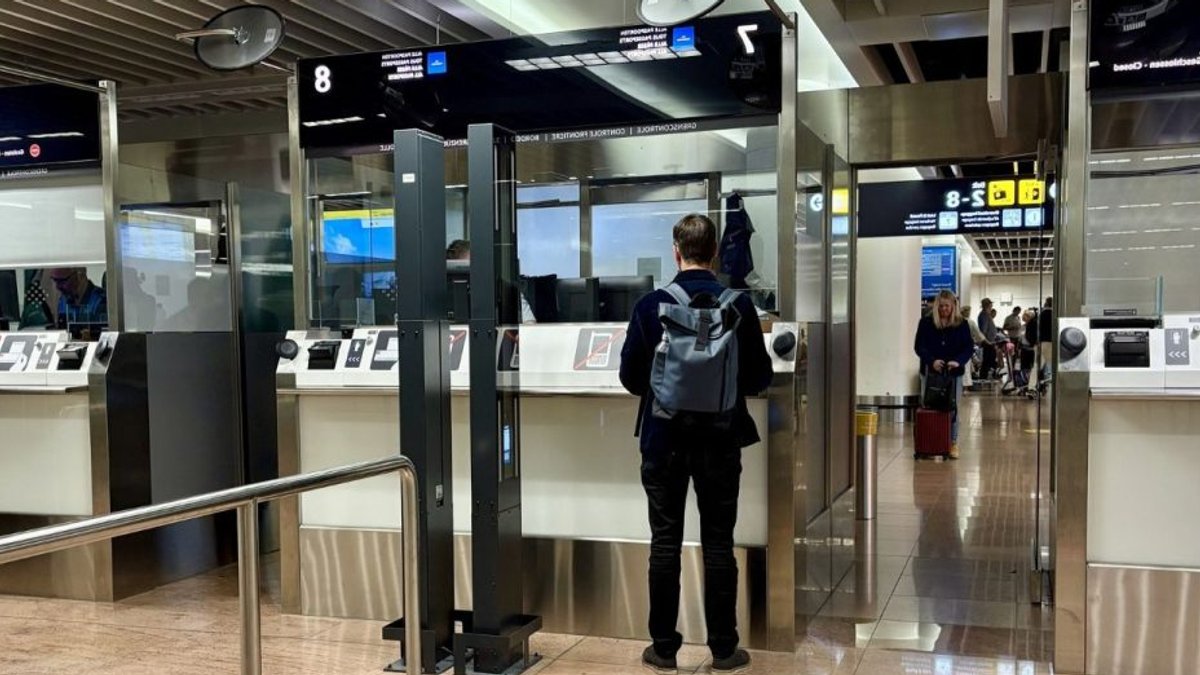
Brussels Airport is expanding its border control capacity to address lengthy queues caused by the European Entry/Exit System (EES). The airport will add eight staffed border control positions and six e-gates to ease the congestion.
The EES, which digitally records non-European travelers’ entries and exits, has increased processing times due to biometric registration and additional checks. As a result, passengers face longer waits at border control across Europe.
The airport will install the eight additional staffed positions at arrivals by December 2026. The six new e-gates will follow in early 2027, increasing arrivals e-gate capacity by 50%.
Brussels Airport had already planned additional infrastructure before the EES launch in late 2025. However, processing times remain significantly higher than expected, prompting the airport to combine further investment with calls for improvements at the European level.
Since the EES introduction, border checks for non-Schengen passengers have taken considerably longer. The system requires biometric data, including facial images and fingerprints, which has contributed to the increased processing times.
The airport had already expanded border infrastructure in 2025, increasing manual control positions by 20% at arrivals and 25% at departures. Despite this, longer EES processing times continue to create excessive queues.
Brussels Airport supports calls from ACI Europe and Airlines for Europe for improvements to EES implementation, including optimized biometric checks and a widely accessible registration app. They want Belgium to offer a registration app, similar to those provided by Sweden and Portugal.
They also call for greater flexibility when queues become excessive, such as temporarily suspending biometric registration during severe congestion. The airport continues to work with relevant authorities and government departments to achieve accurate, secure border control with acceptable passenger waiting times.
The airport will increase arrivals border control capacity by 66% in December 2026, which will be achieved by adding eight manual positions, and consequently, manual arrivals capacity will double within 12 months. Additionally, the airport has invested in 60 EES pre-registration kiosks to reduce manual-check waiting times and help third-country nationals access e-gates. The introduction of these new positions and kiosks will be coordinated with all relevant partners to ensure a smooth implementation process, taking into account operational requirements.


