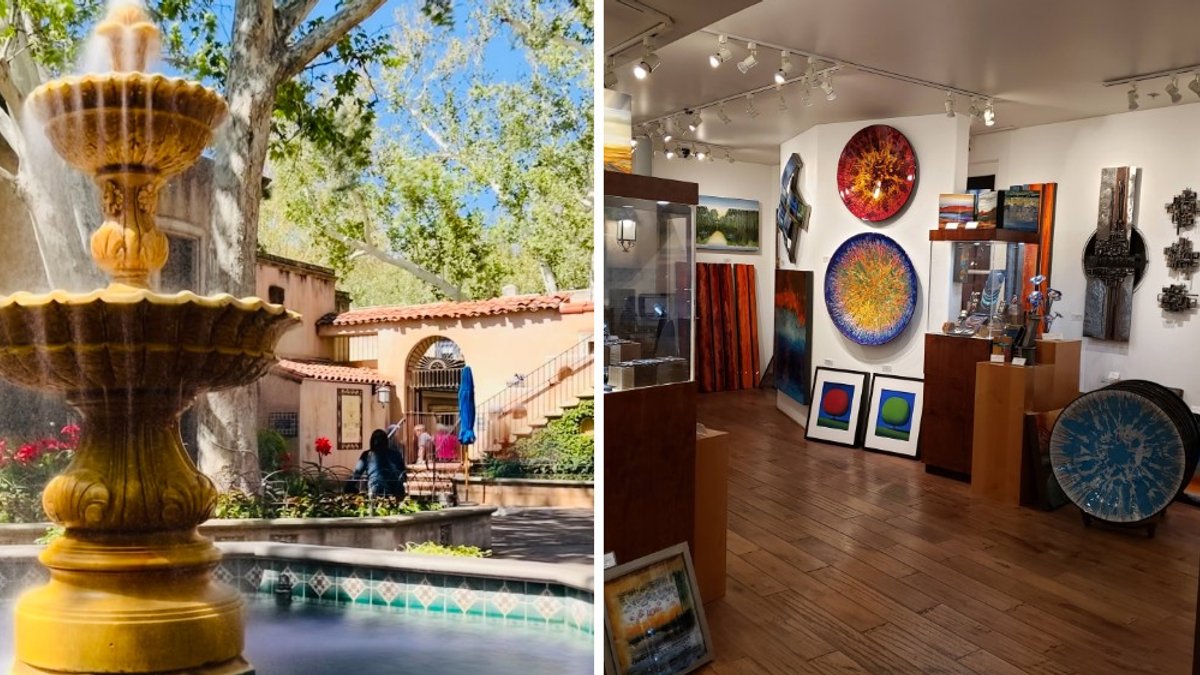
Tlaquepaque Arts & Shopping Village sits in the red rock country of Arizona, but it does not look like the typical American shopping center. Its design pulls from traditional Mexican architecture, featuring stucco walls, terracotta roofs, and arched walkways that connect a series of courtyards. Cobblestone paths wind through shaded areas, leading past fountains and small plazas that separate the shops from the view of Sedona’s famous red rocks.
A Century-Old Vision
The site opened in 1973 after a Nevada businessman named Abe Miller teamed with architect Bob McIntyre. Their goal was to create an artists’ community inspired by San Pedro Tlaquepaque, a town near Guadalajara known for its crafts. The name comes from Nahuatl and is often interpreted as “place on clay hills.” While the area functions as a destination for art lovers, Miller originally intended for it to be a place where craftspeople could work and interact with visitors.
The layout of the village works with the natural environment instead of cutting it down. A grove of century-old sycamore trees grows along what was once Oak Creek. The architects built the courtyards around these trees instead of removing them. The branches provide shade over the stone and stucco structures, and the buildings bend to accommodate the trunks. The land also carries local history; it was once the homestead of Sedona Schnebly, the woman for whom the town is named, and later the property of Harry and Ruby Girard.
Read Also: Louisiana Cajun Buffet Offers Massive Seafood Spread
Walking through the grounds, visitors encounter more than 50 shops, galleries, and eateries. The focus remains on fine art, with bronze sculptures, blown glass, and Native American pieces on display. Handcrafted jewelry and home decor fill the specialty stores. Some galleries allow guests to watch artists work in open studios. This setup turns a simple shopping trip into a closer look at the creative process.
Sedona is known worldwide for its red rock formations, but the village offers a different kind of scenery. The warm colors of the architecture contrast with the red earth and blue sky. The courtyards provide quiet spots for sitting, while fountains and flowers decorate the open spaces. Patios like Plaza de la Fuente and Patio de las Campanas offer places to rest between galleries. The setting makes the architecture feel more like a retreat than a commercial zone.
A Second Village Across the Road
The original complex sits across the highway from another section of the property. A pedestrian underpass connects the two parts of the village. This second area adds more space for visitors to explore. The design continues the same Mexican architectural style found in the first section. It also keeps the focus on art and craftsmanship. The connection between the two parts allows guests to move between them without getting into a vehicle.
Visitors often spend time taking pictures of the architecture. The buildings offer many angles for photography. The courtyards provide quiet spots away from the main paths. Many people enjoy trying to remember which courtyard they entered first. The winding passages make the layout feel like a maze. This design encourages people to slow down and look around. A simple shopping trip here turns into a longer visit.
Read Also: Iowa’s Best Winter Cabins And Lodges Revealed
Lighting Up the Night
The village hosts an annual Festival of Lights celebration. During this event, the courtyards fill with thousands of luminarias. These small paper bags hold candles and glow in the dark. The lights create a warm and magical atmosphere. The festival takes place after dark. It gives the village a different look from its daytime appearance. The glowing lights contrast with the dark sky and the red rocks in the distance.
Exploring the Grounds
Wear comfortable shoes and keep your camera handy to enjoy the winding walkways. Note where you parked before wandering, as the buildings twist and turn. Admission is free, so browsing costs nothing unless you buy something irresistible to take home.
Pause beneath the big trees to look up. The way the buildings bend around the trunks shows how much care went into the plan. Photographers can use the leafy canopies as natural frames for arches and fountains. A quick lap can easily stretch into an afternoon once you start peeking into doorways.


