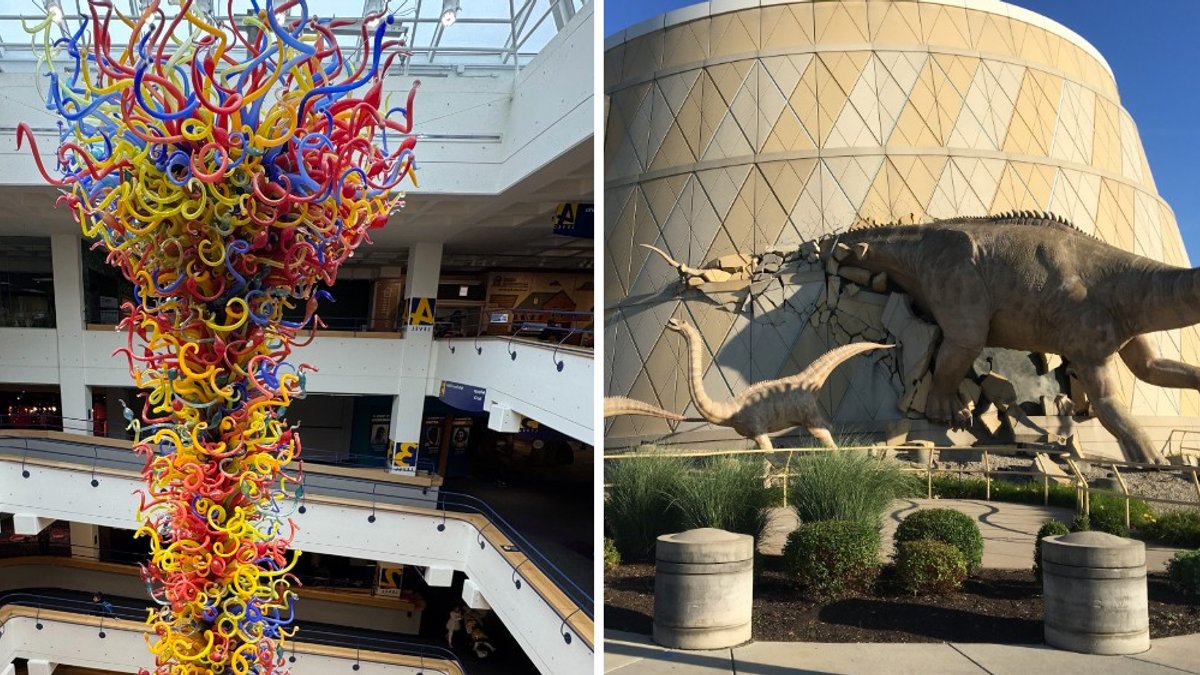
The Children’s Museum of Indianapolis is the largest children’s museum in the world, covering an indoor space of roughly 472,900 to 485,000 square feet across five floors. The museum was founded in 1925 by Mary Stewart Carey, making it the fourth-oldest children’s museum anywhere.
One of the museum’s most striking features is the giant dinosaur sculptures bursting out of its walls. A 75-foot-long Alamosaurus sculpture, named Yvonne, and her two 25-foot-long kids, Greg and Diana, appear to be making a grand escape from the building.
These sculptures were created by artist Brian Cooley and are accompanied by two Brachiosaurus sculptures that peek into the museum’s atrium. The Brachiosaurus Welcome Center and the sculptures arrived in 2009, adding to the museum’s prehistoric theme.
A Massive Museum with Plenty to Offer
The museum’s size is no exaggeration, with a 7.5-acre outdoor sports park and numerous exhibits to explore. Planning is essential to make the most of a visit, with comfortable shoes and stroller rentals available for grown-ups and younger children, respectively.
Lockers are also available on site to stash extra jackets and bags. Breaking the day into chunks helps keep moods steady, and it’s a good idea to pick two or three must-see areas first before wandering around the museum.
The museum has undergone four major expansions since the current building was constructed in 1976, which explains its impressive scale. With so much to see and do, it’s no wonder that the Children’s Museum of Indianapolis is a popular destination for families.
Dinosphere: A Stormy Neighborhood with a T. Rex
Dinosphere is one of the museum’s biggest draws, featuring a recreated Cretaceous and Jurassic habitat with a storm effect that includes thunder and lightning. A teenage Tyrannosaurus rex named Bucky is a star attraction, and kids can even join a dinosaur dig and touch genuine fossils.
The Jurassic Paleo Lab is another highlight, where families can watch paleontologists work on real fossils behind glass. This rare opportunity allows kids to see the patient, careful steps involved in preparing ancient bones and even interact with the paleontologists.
The sculpture is dazzling, with swirls, curves, and bright shapes that look like a frozen fireworks show.
A nearby interactive space lets children design their own glass sculptures virtually, which is a clever idea for little hands. The museum also features a Dentzel carousel that was built in 1917 and is now a National Historic Landmark, offering a fun ride for kids.
The museum’s dinosaur exhibits, including the ones outside, are a major part of its appeal. The Alamosaurus family and the Brachiosaurus sculptures are just a few examples of the many prehistoric creatures on display.


